 MERTON HISTORICAL SOCIETY
 Resources
Morden Manorial Records
Westminster Abbey had owned an estate in Morden (usually spelt Mordon) from before the Norman Conquest. It is fortunate that many of the medieval manorial records are still in existence, mostly in the Muniment Room at Westminster Abbey, though some documents have found their way into other archives. Translations of all the known documents have been added to this website and can be viewed or downloaded from these pages. Images of these documents have also been added alongside the translations, by courtesy of the various archives.
Parish Records
The Parish Registers for Morden and Wimbledon to 1812 were transcribed, indexed and published in the early 20th century.
Peace Souvenir and Programme of Merton Festivities 1919
Photographic Record
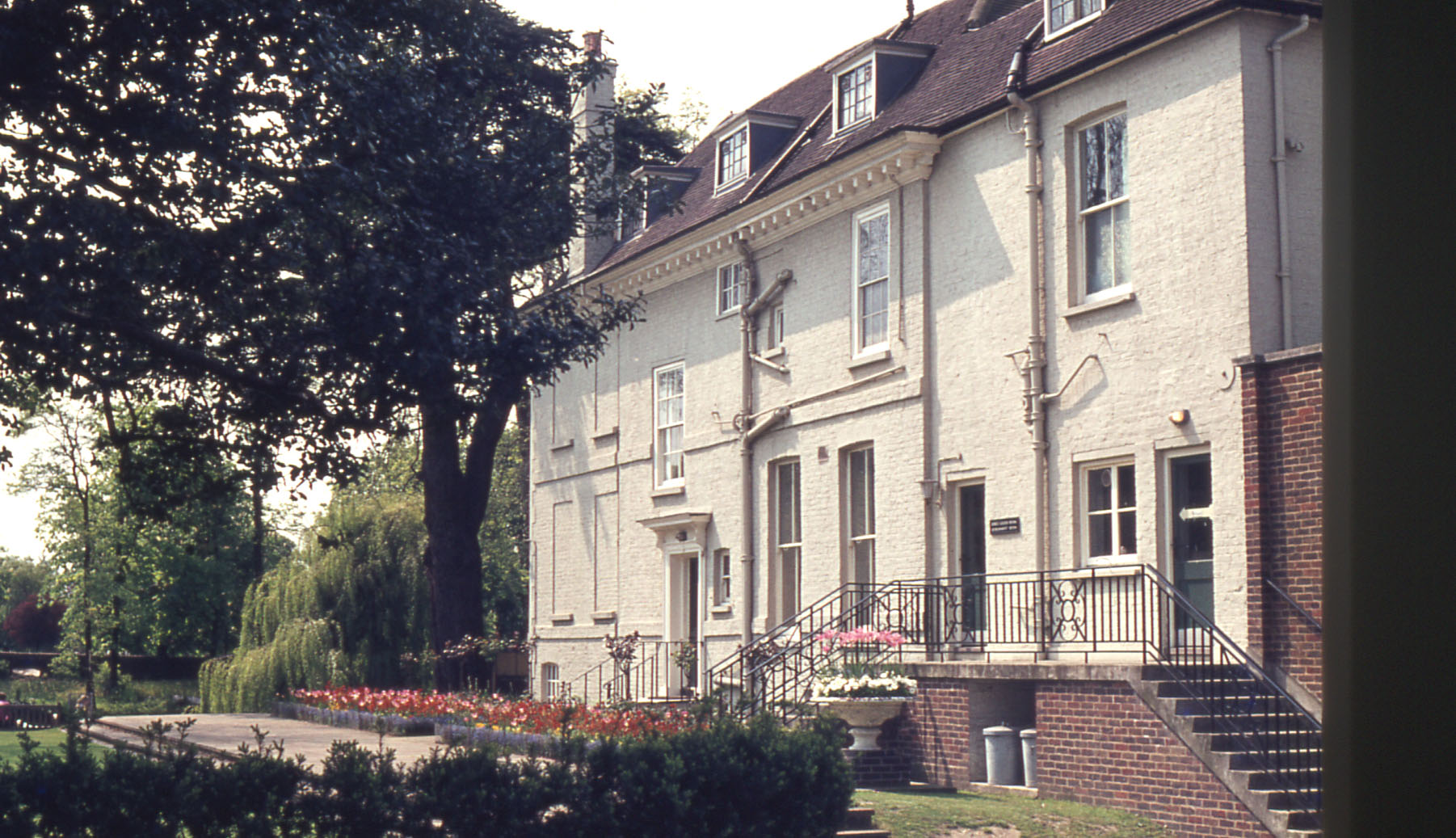
Our newest project is to build up a photographic record of our area, especially of buildings under threat of demolition or major development, and also of subjects not currently covered.
Praise for MHS Project
As a follow-on from the BBC series, there is a monthly genealogical magazine called Who Do You Think You Are? We are very pleased that the February 2012 issue contains a short piece on our ‘Medieval Morden’ project, which aims to publish on our website a photo, transcription and translation of every medieval record relating to Morden.
Research
The Society encourages research into a number of aspects of our local history, as listed on the right.
Research Notes
The Society has inherited from former members various files containing their research notes. Although some of these have been published as standalone booklets or articles in our Bulletins, many contain incomplete and unpublished research material, or additional material to update published works.
Sparrowfeld Common
There are several 14th-century sheriff’s writs and other documents dealing with disputes over common rights in Sparrowfeld Common, particularly with tenants in neighbouring Cheam.
St Helier Estate
The St Helier Estate was built by the London County Council in the early 1930s. At 825 acres, spanning the boundary of Morden and Carshalton, it is the second largest of the Council’s cottage estates. The council architect, G Topham Forrest, included as many of the natural aspects as possible in the design plan, such as trees and hedges. This was supplemented with new planting, shrubberies and greens to soften the effect.
Stane Street
Tax receipts relating to medieval Morden
There are several tax receipts, for both royal and ecclesiastical taxations, which include valuations of the manor and the parish church. Two examples have been transcribed and translated and the rest have been summarised.
The 1312 Extent
In 1312 a detailed survey was undertaken in the form of a valuation or extent, now in Cambridge University Library. As well as recording the tenants and their dues, the various parcels of demesne land were listed, and a value assigned to them. The labour services were likewise given a monetary value, ‘without deductions’ for the allowances of food and drink provided at the lord of the manor’s expense for those undertaking certain services.
The Custumal c. 1225
Two copies survive of a custumal of c.1225 which lists the tenants of the abbey’s manors, including Morden, and records the rents, in cash and in kind, and the customary services that each owed.
The Film Industry in Merton
G H Cricks and H M Sharp had a film studio in London Road, Mitcham from 1901 to 1908, when the partnership broke up. Cricks joined up with J H Martin in Mitcham and then in Croydon before, in 1913, he set up his own studios in Quintin Avenue, Merton. Products included ‘shorts’, a few longer dramatic pieces, and, during the first World War, some propaganda pieces. Film processing continued on the site until the next war.
The manor of Morden
Westminster Abbey had owned an estate in Morden (usually spelt Mordon) from before the Norman Conquest. Domesday Book, a survey commissioned by William the Conqueror in 1086, states: ‘The Abbey of Westminster itself holds Morden. TRE [In the time of King Edward] it was assessed at 12 hides; now at 3 hides. There is land [blank]. In demesne are 3 ploughs; and 8 villans and 5 cottars with 4 ploughs. There is 1 slave, and a mill rendering 40s. TRE it was worth £6; now £10, and yet it renders £15.’[1. Ann Williams & G H Martin (eds) Domesday Book: A Complete Translation (1992, 2002) 32b, 6 ]
The Surrey Iron Railway
The Surrey Iron Railway was authorised by an Act of Parliament in 1801 and was the first public railway although predated by private railways used exclusively by the owners for moving their own goods. Tolls were levied on carriers for their use of the tracks.
Topics
We are building up a bank of Topics relating to our area.
The first few are listed on the right.
Entries are in alphabetical order, people being indexed by surname.
William Morris
William Morris (1834-1896), designer, poet, craftsman, novelist, typographer, businessman, socialist political activist and lecturer, moved his workshops to Merton Abbey in 1881. He leased a textile printing works and nearly three hectares of land on both sides of the River Wandle. Using the site’s old weatherboarded buildings, including a waterwheel, he set up dye vats, printing-tables, looms for carpets and tapestries, and a stained-glass workshop. The working conditions and pay were unusually good for the time. Morris, who lived at Hammersmith, travelled to Merton by train or on foot.